

Report on the Kunishima Study Session
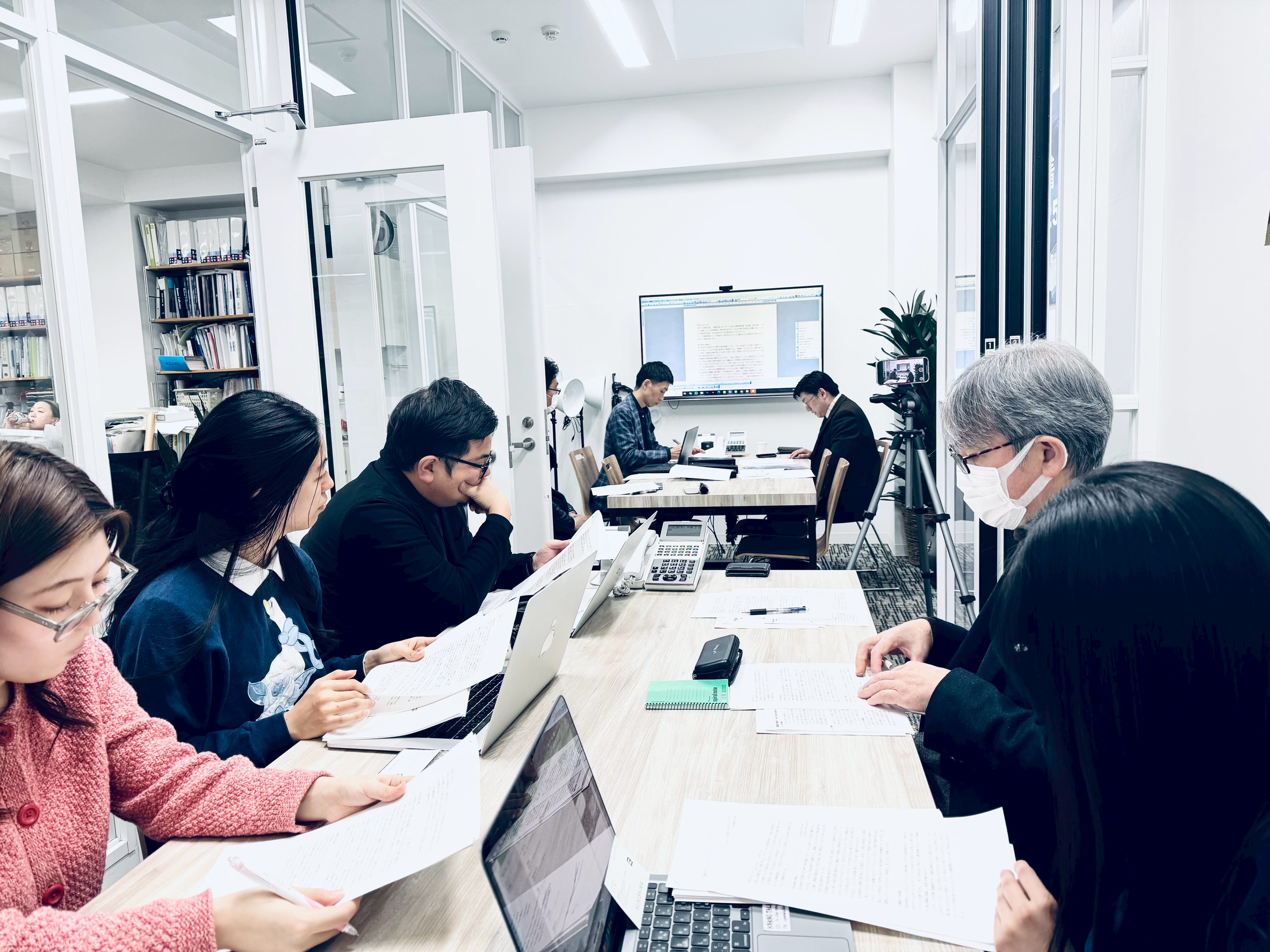
Following last month’s study session with Miyuki Keori Co., Ltd., we were honored to host Kunishima Co., Ltd. on Thursday, November 13, at the 4th floor conference room of our head office.
The session covered an extensive range of topics, including the Bishu textile production region, the history and philosophy of Kunishima, an in-depth explanation of the wool weaving process, Kunishima’s perspective on high-quality fabrics, and their latest seasonal collection.
For more information about Kunishima, please also refer to our previous article below:
Written by Yu Yamamoto, Editor, TAILORS WORLD
目次
About the Bishu Region
What is Bishu?
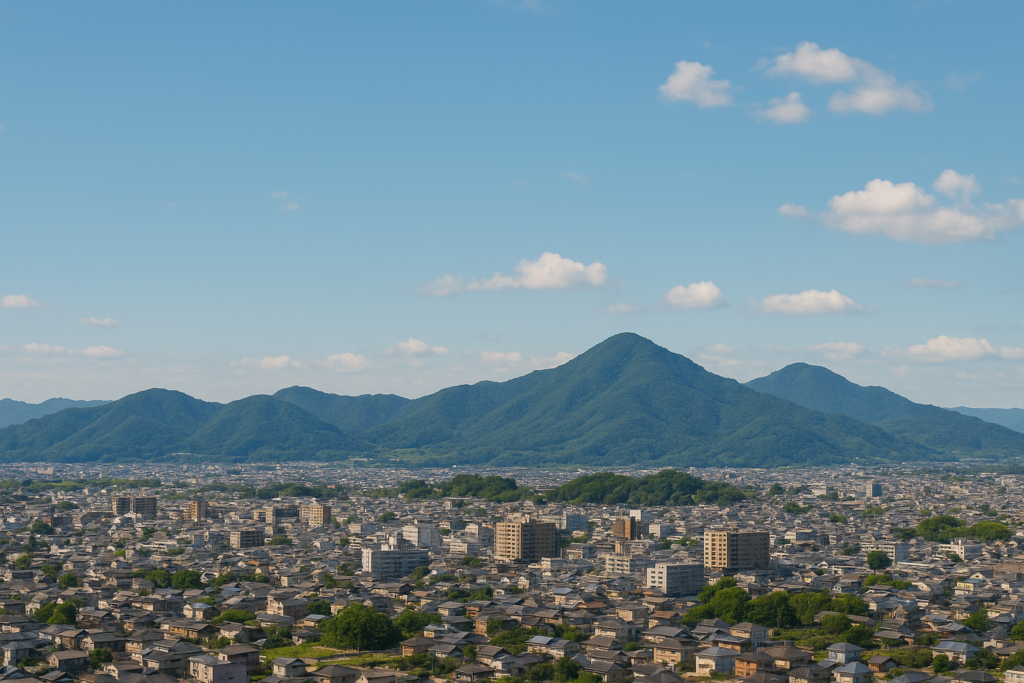
“Bishu” refers to the old province of Owari, which corresponds roughly to the western part of Aichi Prefecture, including Nagoya and the Chita Peninsula, and historically extended into parts of Gifu Prefecture.
As a textile-producing area, Bishu centers around Ichinomiya City and encompasses nearby cities such as Hashima, Konan, and Nagoya.
The Structure of the Bishu Textile Industry
The Bishu region is characterized by a dense concentration of small and medium-sized specialized factories that collaborate in a networked production structure.
At the core are the “parent” mills that manage overall production and sales, supported by “subcontract” mills and numerous specialized processors that handle yarn processing, dyeing, finishing, and repair.
Rather than relying on large capital owners or employing freed peasants, Bishu developed through a “servant apprenticeship system”, in which ambitious apprentices eventually established their own mills — a tradition known as noren-wake (branching out under the same shop curtain).
This led to a unique industrial ecosystem where talented individuals could independently expand, fostering healthy competition and innovation.
Because there was little social conflict between employers and workers, Bishu was able to transition flexibly from a putting-out system to a factory system, retaining the cooperative structure that still defines the region today.
When Kunishima was founded, it was known as Kunishima Shoten, reflecting this historical background as both manufacturer and merchant.
The Transition to Wool Weaving
While Bishu’s community-based factories were agile and innovative, they could not match the production power of large corporations. After the devastating Nōbi Earthquake of 1891, most mills were destroyed, forcing the region to rebuild.
In this crisis, many mills shifted from cotton weaving to wool weaving — a transformation that became the foundation of Bishu’s prosperity.
As Western clothing gradually spread throughout Japan during the late Meiji and Taisho eras, the demand for wool fabrics surged. This new market revitalized Bishu and cemented its reputation as Japan’s leading wool textile region.
The Strengths of the Bishu Textile Region
Advanced Technology
Numerous specialized factories focus on distinct weaving and finishing techniques, producing highly distinctive and technically refined fabrics.
Product Diversity
Collaboration between multiple specialized mills allows for countless yarn combinations and diverse product developments.
Japan’s Softest Water
Soft water is essential for achieving the supple texture of wool fabrics. The Kiso River, which flows through Bishu, has exceptionally low mineral hardness, making it ideal for textile processing.
Specialized Infrastructure
Bishu possesses dedicated textile infrastructure, including a special wastewater treatment system (Tokusui) and a shared production management network (Bishu Net), ensuring efficient regional collaboration.
Resilience to Change
Because the region is composed of many independent factories, even if one closes, others can continue its work. This decentralized structure makes Bishu highly adaptable and resilient to industrial shifts.
About Kunishima Co., Ltd.
History After Its Founding
Kunishima’s early history, once known as Chugai Kunishima, remains largely undocumented due to the loss of company records during wartime.
It was under the leadership of President Tatsukazu Goto (the third generation) that Kunishima effectively experienced a second founding.
Later reorganized as Kunishima Co., Ltd., the company spun off its weaving division as Chugai Keori Co., Ltd. (“Chugai” meaning “domestic and abroad,” symbolizing international growth). Eventually, the two entities merged again as Chugai Kunishima Co., Ltd., reflecting today’s “Kunishima International” identity.
During Japan’s postwar “Gachaman Era” — when each loom stroke was said to earn 10,000 yen — Bishu’s textile industry flourished.
The Ivy League look drove domestic demand, while exports expanded steadily through the 1980s and early 1990s.
However, in the late 1990s, the rise of China’s wool industry dealt a severe blow to Bishu manufacturers. Within a decade, Bishu’s wool production fell to one-tenth, and the number of companies to one-fifth of its former scale. Kunishima also faced serious downsizing and threats to its domestic operations.
To survive, Kunishima undertook comprehensive reforms — diversifying production bases, enhancing product strength, expanding international sales, improving manufacturing technology, and reinforcing quality control.
- 1995: Established Shanghai factory; began overseas production under in-house design and quality management.
- 1997: Launched COBO, a collection for the European and U.S. markets, and built a network of overseas agents.
- 2002: Became the first Asian wool company to exhibit at Première Vision Paris.
- 2008: Introduced its own quality management program to ensure beautiful tailoring performance.
- 2017: Developed a core collection that embodies the true spirit of Chugai Kunishima fabrics.
Kunishima’s Vision for Suits and Fabrics
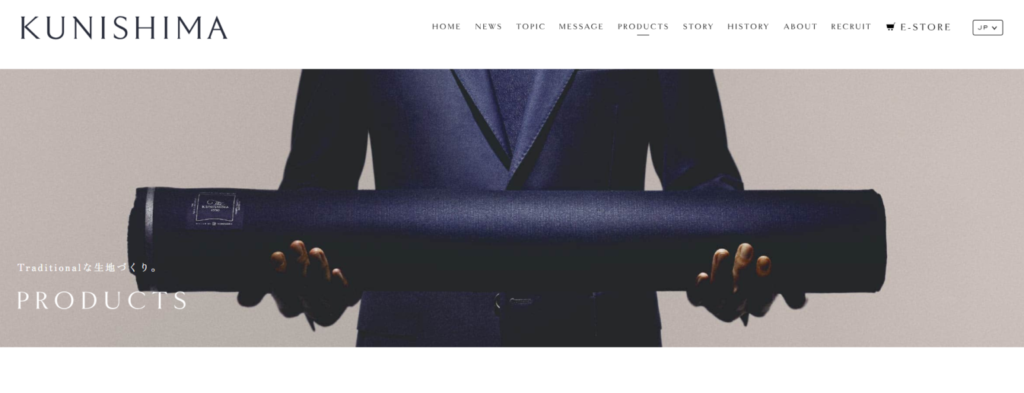
“Fashion constantly challenges tradition, adds playfulness, and overturns conventions.”
Kunishima values slim, well-tailored silhouettes inspired by the 19th-century dandy Beau Brummell and postwar Mods.
While Ivy League influence in Japan led to boxier American styles, Kunishima continues to emphasize fit and proportion as the essence of suiting.
A well-tailored suit is not about decorative detail but about creating a harmonious silhouette that expresses individuality. For this reason, Kunishima even advises its customers — politely yet sincerely — to maintain a healthy posture and physique, believing that a suit looks its best when worn by someone with strength, balance, and confidence.
The ideal fabric therefore requires body, tension, and flexibility to follow the wearer’s movements while preserving the intended silhouette. It must also be easy to sew and mold naturally to the body.
As Brummell suggested, true elegance is understated. A refined suit uses plain fabrics, subdued luster, and rich depth of color — avoiding excessive detail for a clean, timeless appearance.
New Approaches to Quality Management
To continue creating exceptional fabrics and to carry forward a new form of tradition, Kunishima has adopted a procedural approach to quality management since 2008.
Rather than relying solely on craftsmen’s intuition, production now follows documented procedures and environmental standards, allowing errors to be analyzed systematically.
By collecting and storing time-series data, the company continuously improves its quality control at an organizational level.
In terms of technology, Kunishima pursues innovations that ensure stability and reproducibility, enabling consistent production of new and unique woven fabrics.
Kunishima’s Manufacturing Process — From Yarn to Fabric
Yarn Preparation
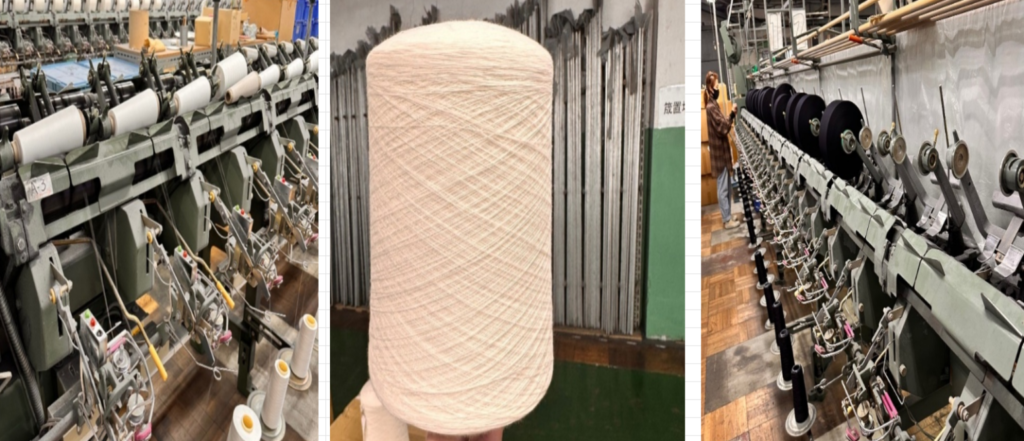
Yarns are carefully subdivided into cones for warping and thicker rolls for weft use. Kunishima employs double-yarn splicer winders that automatically join broken threads using air pressure — eliminating knots to ensure smooth, high-density weaving.
Warping
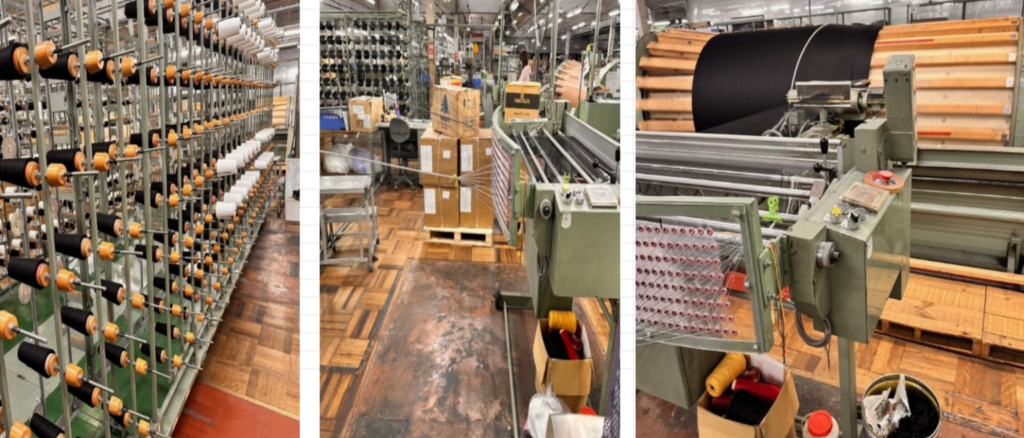
Up to 600 cones are set on a creel for simultaneous warping. Depending on the order, over 10,000 warp threads may be prepared for a single 150 cm-wide fabric. The warp is wound from the drum onto beams, each set according to precise specifications.
Drawing-in
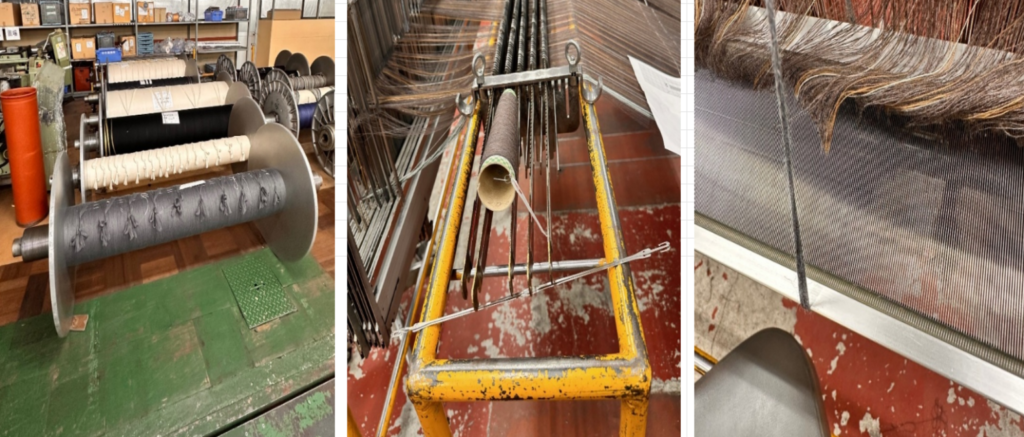
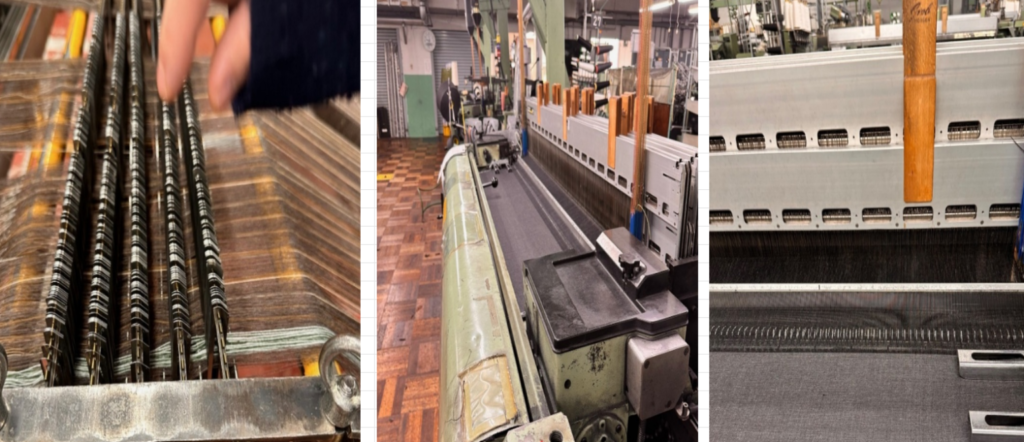
Each warp thread passes through heddles and reeds, determining the weave pattern and density. The setup allows for plain, twill, or complex weaves, depending on thread count and spacing.
Weaving
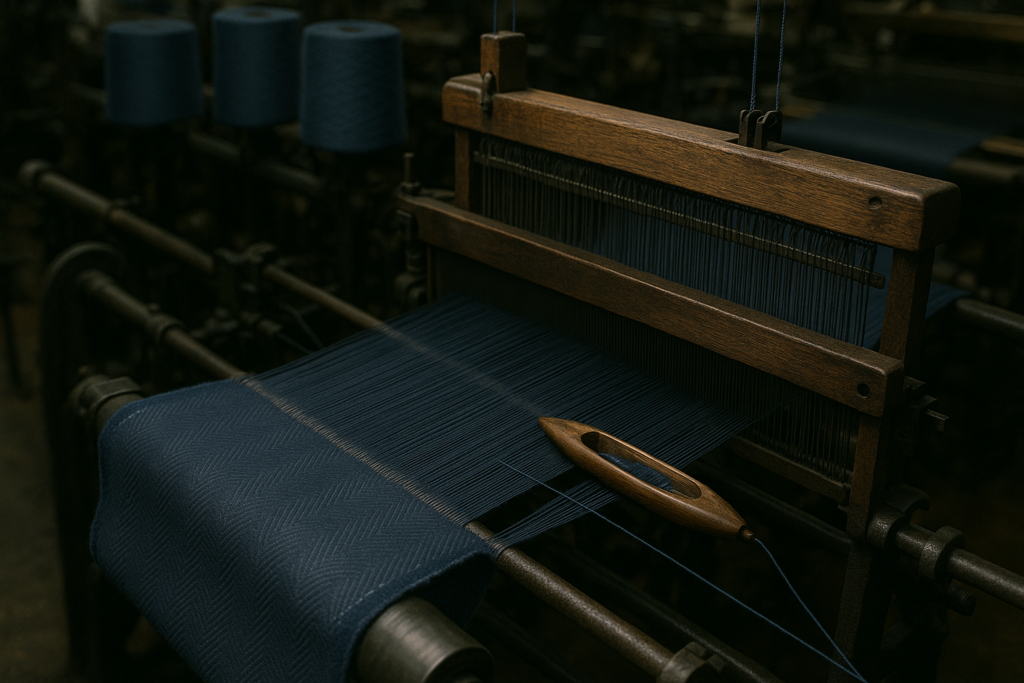
Kunishima uses projectile looms that insert weft yarns with metal grippers instead of shuttles, producing dense, high-precision fabrics.
Dobby looms create detailed selvage names — up to 72 warp threads per side, allowing even Japanese kanji and custom symbols.
Rapier looms are also used for flexible, high-speed weaving.
Factory Management, Inspection, and Finishing
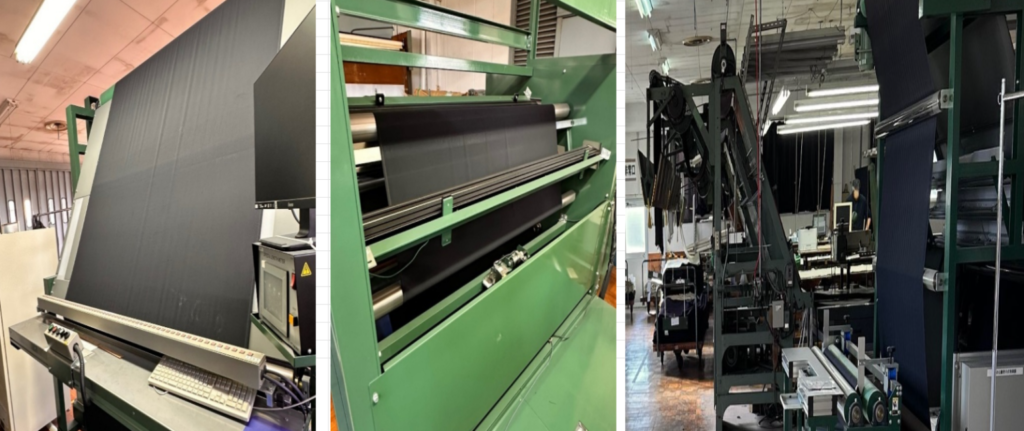
All looms are digitally monitored, and technicians carry mobile devices to respond instantly to any thread breaks or stoppages.
Finished fabrics are visually inspected by experienced staff, and minor weaving errors are repaired by specialists.
Kunishima is also developing AI-assisted automated inspection systems, training artificial intelligence on the expertise of veteran inspectors to streamline quality control.
This Season’s Collection
Kunishima’s 2025 collections — “BEST SELECTION” and “HERDREX” — showcase the company’s finest wool materials.
For detailed fabric images and specifications, please refer to our previous article:
Conclusion

The study session proved to be highly informative and inspiring, offering deep insight into the 150-year legacy of Kunishima’s craftsmanship and its enduring commitment to quality and innovation.
For inquiries regarding fabrics, orders, accessories, or tailoring services related to the above, please contact us through the link below.

After 2 years of training at a major order-made suit store in Japan, I started my career in apparel materials and fabrics.
I’m especially good at suits and coats.